01
Pattern reasoning
How they spot rules, relationships, and what comes next.
When marks do not tell the whole story
When your child finds some work easy and gets stuck on other tasks, it can be hard to know what to try next. In 10–15 minutes, age-aware activities turn five thinking-skill results into practical ideas for home.
No account · Assessment first · Full parent action guide KES 180 · Pay by M-PESA only if you choose to unlock it

Private, age-aware educational guidance—not a clinical diagnosis
The thinking behind the answers
Each area adds context to what you already notice at home and in school.
01
How they spot rules, relationships, and what comes next.
02
How they understand shape, position, rotation, and space.
03
How they hold and use small pieces of information.
04
How they reason through number patterns and relationships.
05
How they connect words, ideas, meanings, and categories.

Beyond the report card
When a child finds something easy or gets stuck, it can be hard to know why. ElimuKids helps you see the approaches behind the answers, so support at home feels more specific and encouraging.
Start with the moment you recognise
ElimuKids is most useful when marks or everyday learning leave you unsure what may help.
You know your child can learn, but some tasks take much more effort than expected.
Explore the homework guideOne subject goes well while another does not, and the report card does not explain the difference.
Look beyond uneven marksYou want a broader view of how your child reasons, remembers, and solves problems.
Explore their strengthsThe parent action guide
See what came more easily, where encouragement may help, and what you can try over the next two weeks. Age comparison appears only where approved reference data supports it.

A simple three-step journey
No account wall, subscription, or payment before the assessment.

Enter a nickname, age, and mobile number, then review consent.

Your child completes short, age-appropriate activities on a phone or tablet.
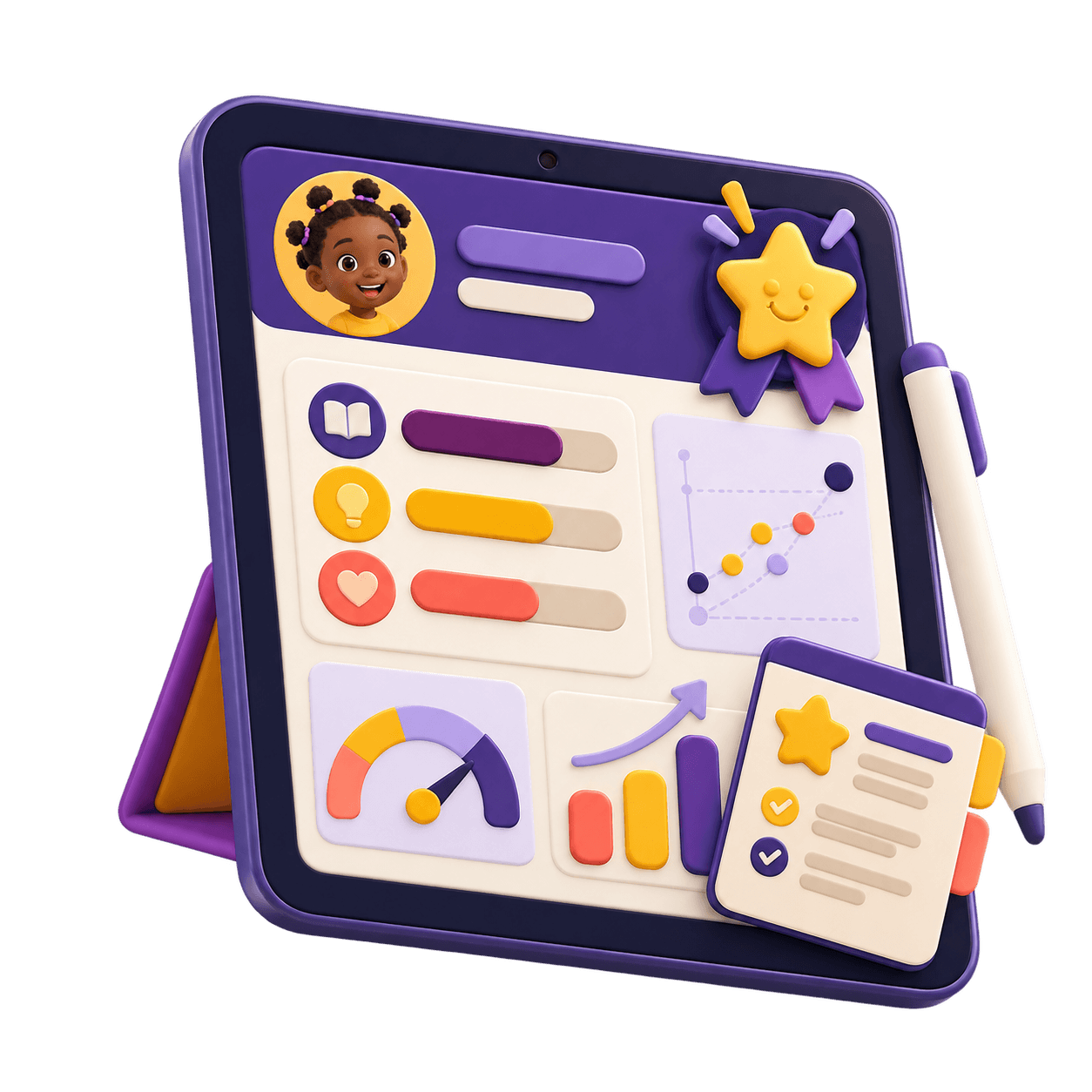
After the assessment, pay securely by M-PESA only if you want the full profile and practical next steps.
One clear price. The assessment is free to take. Unlock the complete parent action guide for KES 180 by M-PESA.
Parent voices
These cards are layout placeholders. Replace every quote, name, and location with consented feedback from the parent pilot before public launch.
“Replace this with a verified parent quote about moving from confusion to one practical next step.”
“Replace this with a verified parent quote about noticing a strength that school marks did not make obvious.”
“Replace this with a verified parent quote about using an ElimuKids activity at home or in a teacher conversation.”
Designed with care
Useful insight should never come at the cost of privacy, pressure, or labels. These boundaries are built into the experience.
Contact details are encrypted and kept apart from assessment responses.
Read the privacy detailsActivities are selected for age and designed for one focused sitting.
Read how it worksThe guide supports conversations; it is never presented as a diagnosis.
Read common questionsQuestions parents ask
Clear answers, including when age comparison is appropriate and when it is not.
No. ElimuKids gives educational guidance across several thinking areas. It does not diagnose learning, developmental, or medical conditions, and it does not reduce your child to one IQ-style number.
Age-aware activities are selected for your child. A report shows age-referenced ranges only where an approved reference dataset supports that comparison; otherwise it uses the approved score bands without inventing a national ranking.
No. Your child completes the assessment first. You decide afterward whether to pay for the private parent action guide and downloadable PDF.
A modern phone or tablet with a stable internet connection is enough. Set aside about 10–15 quiet minutes and let your child answer independently.
ElimuKids collects only what the experience needs. Contact details are encrypted and kept separate from assessment responses, and reports use expiring access links.
Ready when you are
Start with the free assessment. Decide on the full parent action guide after your child finishes.
Start the free assessment